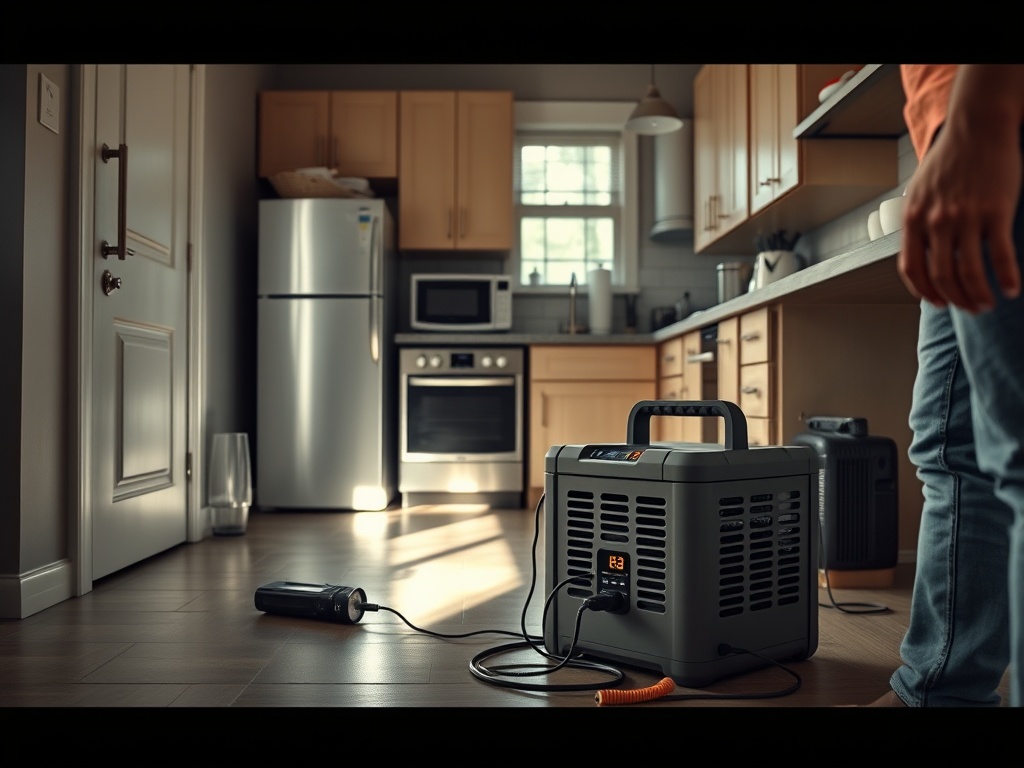

Choose backup power by listing the devices that truly must run, estimating their starting and running loads, deciding how long an outage you want to cover, and then matching those needs to a safe power source.
TL;DR: Choose backup power by listing the devices that truly must run, estimating their starting and running loads, deciding how long an outage you want to cover, and then matching those needs to a safe power source. Portable power stations suit quiet, lower-load needs; fuel generators can support larger loads but require strict outdoor operation; permanently installed systems offer convenience at a higher cost.
Start With the Loads That Actually Matter
A useful backup plan begins with a short essentials list, not with a generator catalog. During an outage, most households do not need normal electrical use. They need to protect food, maintain communication, provide safe lighting, keep essential medical equipment running when applicable, and support a few climate-sensitive building systems.
Write down every device you would want to operate. For each one, record its rated watts from the label, manual, or manufacturer specifications. Refrigerators, freezers, pumps, compressors, and some power tools may draw more power for a brief moment when they start than while they run. A backup source that appears large enough on running watts alone can still overload when several motor-driven loads start at once.
Separate the list into three tiers: must run, useful if capacity remains, and normal-life extras. That ranking helps avoid buying excess capacity for appliances that could simply stay off during an outage.
If emergency readiness is the broader goal, pair this electrical plan with a basic household outage kit. Ready.gov's preparedness guidance emphasizes alternative charging, lighting, communications, food, water, and other supplies because backup electricity is only one part of outage resilience.
Compare the Main Backup Power Types
| Option | Best fit | Main trade-offs |
|---|---|---|
| Portable battery power station | Phones, laptops, lights, networking, selected small appliances | Finite stored energy; recharge time; high-draw loads shorten runtime |
| Portable fuel generator | Higher loads and longer outages when fuel is available | Carbon monoxide risk, noise, outdoor placement, fueling and connection safety |
| Standby generator | Automatic backup for selected circuits or a larger share of the home | Installation cost, fuel infrastructure, maintenance and permits |
| Home battery system | Quiet automatic backup, often with solar or load management | Higher upfront cost; capacity and power limits must match essential loads |
No single option is best for every home. Portable battery units are usually the simplest choice for phones, laptops, lamps, networking gear, a CPAP machine when compatible, or other moderate loads. They are quiet at the point of use and do not produce engine exhaust, but their useful runtime depends on stored energy and the wattage of connected devices.
Portable fuel generators can support heavier loads for longer periods when fuel is available. They also introduce exhaust, noise, refueling, storage, weather protection, and electrical-connection concerns. Whole-home or standby generators can start automatically and feed selected circuits or much of the house, but installation, fuel supply, permitting, maintenance, and transfer equipment make them a larger project.
Battery systems paired with solar can provide a different form of resilience. The U.S. Department of Energy explains that typical grid-connected rooftop solar does not automatically keep a home powered during an outage; storage and appropriately designed controls are needed for backup operation. That distinction matters if solar panels are already on the roof.

Estimate Runtime Instead of Shopping by a Single Number
Power and energy are different. Watts describe how much power a device uses at a moment. Watt-hours describe stored energy over time. A battery labeled in watt-hours can therefore be roughly compared with the total energy your essential devices consume, though inverter losses, temperature, battery management, and manufacturer operating limits reduce real-world runtime.
For a first-pass estimate, multiply each device's watts by expected operating hours and add the essentials. Cycling appliances such as refrigerators do not draw their full running wattage continuously, so a plug-in energy monitor can be more useful than guessing. For hardwired equipment, use manufacturer data or ask a qualified electrician.
For a fuel generator, runtime is shaped by load and fuel consumption rather than a fixed battery capacity. That makes fuel availability part of the sizing decision. A generator that can run every circuit is not especially useful if the household cannot safely store or obtain enough fuel during the kind of outage it is meant to cover.
Decide How You Will Connect the Loads
Small portable battery stations are often designed for direct plug-in use. Portable generators may also power individual devices through properly rated outdoor extension cords, but connecting a generator to household wiring is a different matter. Never improvise a backfeed connection through a receptacle. A professionally installed transfer switch or other approved interlock arrangement is used to isolate the home from the utility and reduce the risk of energizing utility lines.
If the plan includes a well pump, furnace blower, sump pump, central air equipment, electric range, or another hardwired or high-draw load, involve a licensed electrician before purchasing equipment. The electrician can identify circuit requirements, starting loads, local code issues, and a safe connection method. This is a general best practice rather than a substitute for local electrical rules, which vary by jurisdiction.
Outages can also affect pumps and controllers. Reviewing how to reopen a garden irrigation system in spring is a practical time to identify which outdoor components depend on electricity.
Treat Generator Exhaust as a Life-Safety Issue
Fuel-burning generators produce carbon monoxide. The CDC advises operating portable generators outside and more than 20 feet from windows, doors, and vents, with a battery-powered or battery-backup carbon monoxide detector in the home. A garage, carport, basement, porch enclosure, or open doorway is not an acceptable substitute for true outdoor placement.
Use the manufacturer instructions for grounding, weather exposure, cord selection, load limits, cool-down periods, and refueling. Store fuel only in approved containers and according to local fire-safety requirements. Never refuel a hot running generator. If rain or snow is expected, use a purpose-built generator cover or shelter that preserves ventilation rather than enclosing the engine.
Battery systems avoid combustion exhaust at the point of use, but they still require correct charging, ventilation if specified, dry placement, and manufacturer-approved cables. Do not block cooling vents or use damaged battery packs.
Build a Practical Decision Framework
Choose a portable power station when the priority is quiet indoor use for electronics and a defined set of moderate loads, and when recharging options are realistic. Choose a portable fuel generator when higher power and longer operation matter more than noise and hands-on fuel management, provided there is a safe outdoor location. Consider a standby generator when automatic operation, hardwired loads, and longer outages justify installation and maintenance costs. Consider a home battery when quiet operation, solar integration, load shifting, or a more seamless electrical system fits the household's goals and budget.
Do not forget the non-electrical side of resilience. Exterior visibility can become a problem during a blackout, but adding brighter fixtures is not always the answer. A separate guide to improving outdoor visibility without overlighting explains how shielding, placement, and controls can improve useful light without flooding the property.
Build Your Outage Plan Before You Buy
Make the essentials list, verify the actual loads, decide the outage duration you want to cover, and identify a safe connection method. Then compare products within the category that fits those requirements. That order reduces overspending and makes the safety plan part of the purchase rather than an afterthought.
For a small apartment or multipurpose room, your backup list may also include work equipment. Planning a compact home office in any room can help separate truly essential electronics from equipment that can remain off during an outage.
This information is educational and does not replace advice from a licensed electrician, generator installer, utility, fire authority, medical-equipment provider, or local code official.