
Compression testing measures how much pressure each cylinder can build during cranking, while leak-down testing shows where pressure escapes when compressed air is applied to a cylinder.
Quick takeaways
- Compression testing is often a first look at cylinder sealing consistency.
- Leak-down testing is more targeted because it can point toward rings, valves, or head-gasket paths.
- Neither test alone tells the whole engine story without symptoms, scan data, and visual inspection.
Why Shops Use These Tests
Engines need sealed cylinders to create power. When a vehicle has misfires, rough running, oil consumption, hard starting, low power, or unexplained coolant loss, a shop may need to know whether the engine can seal properly. Compression and leak-down tests help answer that question without immediately dismantling the engine.
These tests are diagnostic tools, not automatic repair orders. Results must be interpreted with the vehicle's design, mileage, symptoms, and manufacturer specifications. A single low cylinder may mean a different repair path than uniformly low readings across all cylinders.
Compression Testing in Plain English
During a compression test, a gauge is installed in place of a spark plug or through an appropriate access point, and the engine is cranked. The gauge records pressure for each cylinder. The technician compares readings across cylinders and against service information. Consistency often matters as much as the exact number.
Compression testing is relatively quick compared with deeper mechanical testing, but it has limits. Battery condition, cranking speed, throttle position, engine temperature, and test setup can affect readings. If the results suggest a sealing issue, the shop may recommend a leak-down test for more detail. For electrical no-start issues that can interfere with cranking tests,
| Test | What it shows well | What it cannot prove alone |
|---|---|---|
| Compression test | Cylinder pressure during cranking | Exact leak location |
| Wet compression check | Whether oil temporarily improves sealing | Final ring condition without context |
| Leak-down test | Where air escapes from a sealed cylinder | How the engine performs under every load |
| Scan data | Misfire and sensor clues | Mechanical sealing by itself |
| Road test | Real-world symptom behavior | Internal fault location |
Leak-Down Testing for Deeper Clues
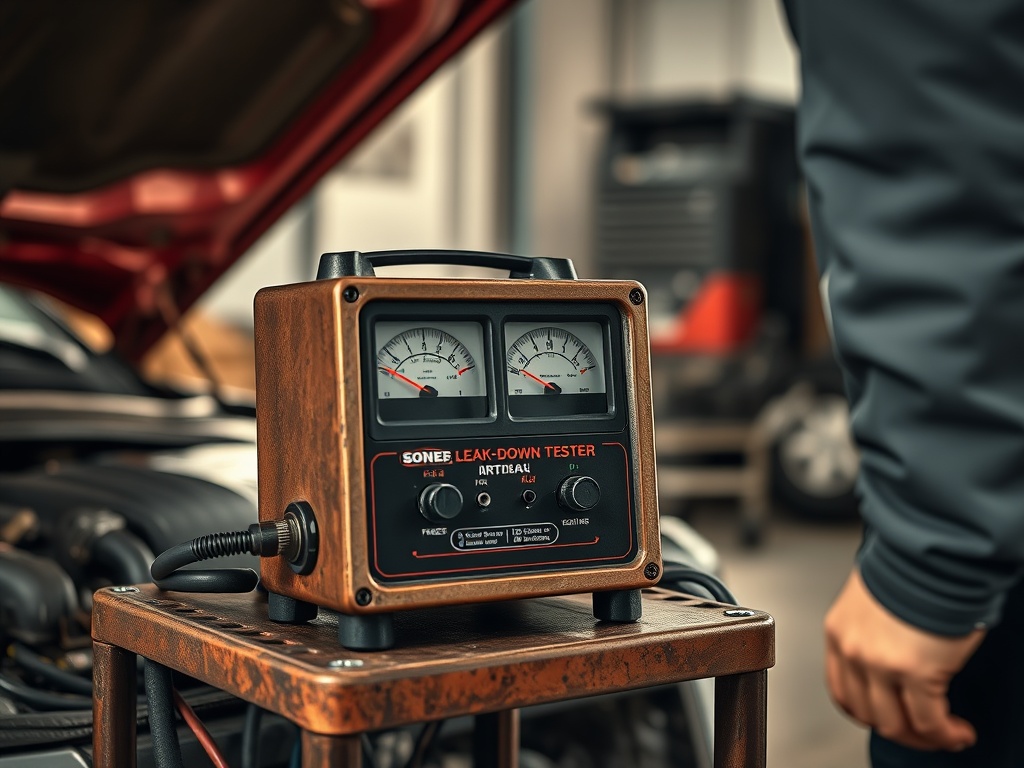
A leak-down test positions a cylinder at the correct point, sends compressed air into it, and measures how much air escapes. The technician listens and observes. Air from the intake may suggest an intake valve sealing issue. Air from the exhaust may suggest an exhaust valve issue. Air from the oil filler may point toward rings or cylinder wear. Bubbles in coolant may suggest a head-gasket or casting path.
Those interpretations are general. Vehicle-specific procedures matter, especially on engines with variable valve timing, tight access, or unusual designs. The test requires care because the engine can rotate if the cylinder is not positioned correctly.
Cost, Downtime, and Risk Differences
Compression testing is often less involved and may be used earlier in diagnosis. Leak-down testing can take longer because each cylinder must be positioned and evaluated carefully. The cost difference depends on engine access, number of cylinders, spark plug location, and whether other parts must be removed.
The value comes from avoiding guesswork. Replacing ignition coils or injectors will not fix a burned valve. Replacing a head gasket will not solve a wiring issue. Good diagnosis connects mechanical tests with scan data, inspection, and symptom history. Clear customer notes, as discussed in how to communicate car symptoms clearly, is part of making those results useful.
When the Tests Are Worth Requesting
These tests are worth discussing when a misfire remains after basic ignition and fuel checks, when one cylinder repeatedly sets a fault, when there is uneven cranking sound, when oil or coolant symptoms suggest internal wear, or when buying a used vehicle with suspicious engine behavior. They may also be useful before approving major engine work.
Ask the shop what the test will confirm or rule out, how results will be reported, and whether readings will be compared across cylinders. A photo of gauges or a written result table can help you understand the recommendation.
Turn Results Into a Repair Decision
If readings are healthy and even, the shop should keep looking outside the engine's mechanical sealing. If one or more cylinders are weak, the next decision depends on vehicle value, repair cost, parts availability, and how long you plan to keep the car. The right outcome may be repair, replacement, continued monitoring, or walking away from a used-car purchase.
Questions to Ask Before Approving Engine Teardown
Before approving major engine work, ask what the mechanical tests showed and how confident the shop is in the conclusion. Good reports usually compare cylinders, explain the outlier, and connect the result to the symptom. A recommendation for teardown should not rest on a single vague statement such as “low compression” without context.
Ask whether ignition, fuel, air, timing, and software factors were considered where relevant. A misfire can be mechanical, but it can also come from coils, injectors, wiring, vacuum leaks, or control issues. Compression and leak-down testing are valuable because they help prevent unnecessary parts replacement, not because they replace every other diagnostic step.
If the vehicle is old or high-mileage, use the results to make a value decision. Repairing a cylinder-head issue, replacing an engine, or selling the vehicle as-is are very different paths. The right answer depends on cost, vehicle condition, parts availability, and your need for reliability.
Reading Results Without Overreacting
A low reading should start a conversation, not panic. Ask whether the test was repeated, whether the battery and cranking speed were adequate, and whether the engine was tested under the conditions required for that vehicle. Ask how the low cylinder compares with the others and whether a wet test, borescope inspection, or leak-down test is needed to narrow the cause.
If results point to internal wear, ask for repair options in stages. Some vehicles justify engine repair because the body, transmission, and history are strong. Others do not. A good shop can explain the technical finding and still respect the ownership decision. Engine health testing is most useful when it supports a practical choice, not when it pressures you into the most expensive path.
Used-Car Engine Check Reminder
For a used-car purchase, these tests are most useful when symptoms justify them. A smooth, well-documented vehicle may only need a normal inspection. A vehicle with misfires, smoke, coolant loss, low power, or uneven cranking deserves deeper mechanical testing before purchase. Paying for the right test before buying is often easier than arguing about engine condition after the sale.