A portable jump starter can get a vehicle running when the battery is weak, but shop testing explains why the vehicle failed to start and whether the battery, alternator, starter, cables, or parasitic draw is involved.
Quick takeaways
- A jump starter is a recovery tool, not a diagnostic report.
- Repeated jump-start needs point to an underlying charging, battery, or electrical issue.
- Shop testing provides stronger evidence before replacing expensive electrical parts.
What a Jump Starter Can Prove
A portable jump starter can prove that the engine may crank with external power. That is helpful on a cold morning, in a parking lot, or during fleet downtime. It may also point toward a discharged or weak battery if the vehicle starts normally with assistance. Still, it does not prove the battery is the only problem.
A battery may be weak because it is old, undercharged, sulfated, exposed to extreme temperatures, or drained by a parasitic draw. A vehicle may also fail to start because of cable corrosion, a starter issue, a charging fault, a poor ground, or an ignition-control problem. A booster pack cannot separate those causes by itself.
What Shop Testing Adds
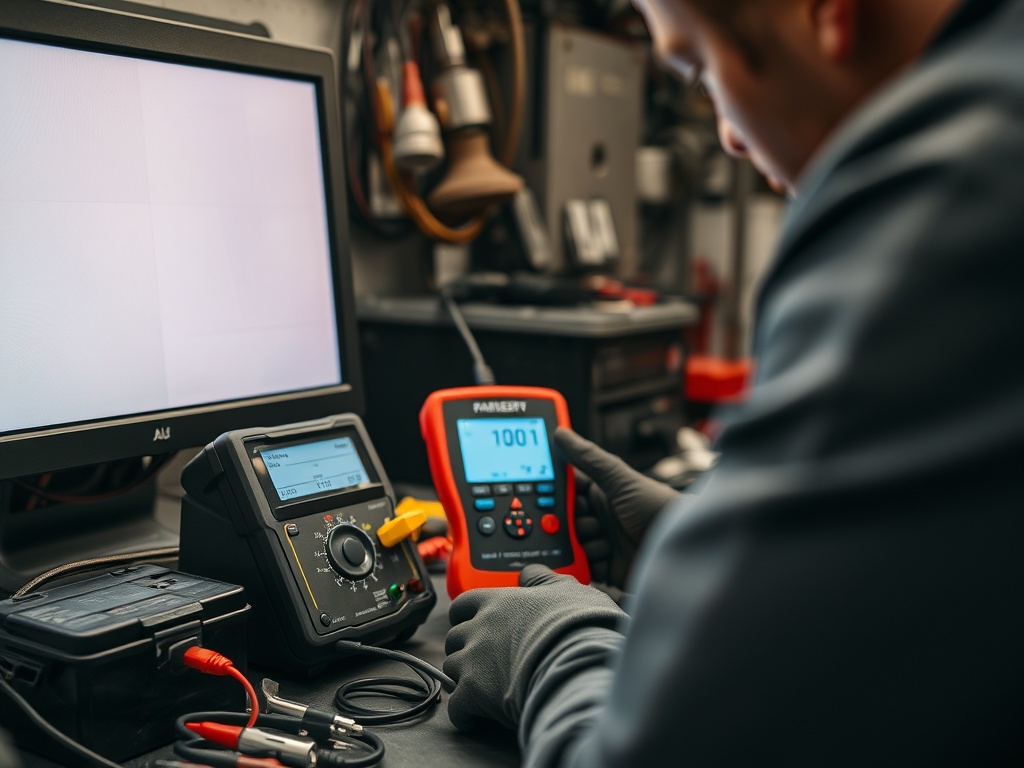
A shop can test battery state of charge, battery health, cranking voltage, alternator output, voltage drop across cables, starter draw, and parasitic current draw when needed. Those tests turn a guess into a clearer repair decision. Interstate Batteries offers consumer guidance on testing a car battery, while shop equipment can add load, conductance, charging-system, and parasitic-draw checks.
| Question | Portable jump starter | Shop testing |
|---|---|---|
| Can it get the car running? | Often yes if the battery is discharged | Not its main purpose |
| Can it measure battery health? | Usually no, unless it has limited test features | Yes with appropriate equipment |
| Can it find parasitic draw? | No | Yes, with time and testing |
| Can it verify alternator output? | No reliable proof | Yes under load and voltage checks |
| Best use | Emergency recovery | Repair decision and prevention |
When a Jump Is Enough for the Moment
A jump may be enough for the moment if the cause is obvious and temporary, such as lights left on, a door not fully closed, or a vehicle that sat unused. Even then, the vehicle should be driven or charged according to safe battery-charging guidance, and the owner should watch for repeat symptoms. If the same vehicle needs another jump soon, the problem should be tested.
Do not keep boosting a vehicle that smells like sulfur, shows a swollen battery case, has sparking beyond the normal connection moment, or has visibly damaged cables. Those are stop-and-check signals. Batteries contain acid and can release gas, so safe connection order and eye protection matter.
Cost, Lifespan, and Downtime Tradeoffs
A portable jump starter is a relatively small ownership tool compared with towing or emergency service, especially for drivers in cold regions or fleet operators. The downside is false confidence. A vehicle that starts with a booster pack can still strand you later if the alternator is not charging or a module is draining the battery overnight.
Shop testing costs more than pressing a jump-start button, but it can prevent unnecessary battery replacement. It can also reveal that the charging system, cables, or starter needs attention. For fleet owners comparing on-site support with shop visits, the same decision logic appears in mobile fleet service vs bringing vehicles to the shop.
Signs the Problem Has Moved Beyond Routine
Get professional testing if the vehicle needs repeated jumps, starts slowly after a full charge, shows a battery or charging warning light, clicks without cranking, loses electrical accessories while driving, or has corrosion that returns after cleaning. Also test the system after installing a new battery if the old one failed early.
For consumer questions about estimates and approvals, the FTC's
Use the Booster, Then Find the Cause
Keep the jump starter charged, store it safely, and follow the manufacturer instructions. Once the vehicle starts, treat that success as step one, not the full answer. The smarter next step is to confirm the battery and charging system before the next no-start happens in a worse place.
After the Jump: What to Check Next
Once a vehicle starts, note how it behaved. Did it crank slowly, click once, reset the clock, show a battery light, or start normally with assistance? Those details matter because they point toward different systems. A weak battery, poor cable connection, failing starter, or charging issue can all produce a no-start complaint, but they do not require the same repair.
A shop test is especially useful before a long trip, after a battery dies more than once, or when the battery is still relatively new. Ask for the battery health result, charging voltage, cable condition, and whether a parasitic draw test is needed. If the vehicle has many accessories, telematics, or aftermarket electronics, overnight draw testing may be more important.
A portable booster belongs in the emergency kit, but it should not become a routine starting method. If you need it twice in a short period, the vehicle is giving you a pattern. Treat that pattern as the real problem and test it before the next failure happens at work, school, or a fuel stop.
Storage, Safety, and Replacement Timing
A booster pack should be stored where it stays charged, dry, and protected from extreme heat. Check it monthly if you depend on it for commuting or fleet work. Damaged cables, swollen cases, or inconsistent charging are reasons to replace the unit rather than trust it during an emergency. Follow the manufacturer instructions for connection order and never use a booster on a visibly damaged battery.
Battery age matters, but age alone is not diagnosis. A newer battery can fail from undercharging, heat, vibration, poor connections, or a vehicle draw. An older battery can still test acceptably for a short period. The useful question is not simply “how old is it?” but “can it hold charge, deliver current under load, and recover after normal driving?” Shop testing answers that more reliably than a successful jump.
No-Start Pattern Log
Keep a short no-start log if the problem repeats. Record date, temperature, whether lights worked, whether the starter clicked, how long the vehicle had been parked, and whether a jump helped immediately. Those details help a shop decide whether to test the battery first, inspect cables, check charging output, or look for a parasitic draw. A pattern log is simple, but it can save paid diagnostic time.
Roadside Tool, Shop Answer
The cleanest habit is to treat the booster as a bridge to testing. Use it to get out of a stuck situation, then verify the system before trusting the vehicle again. That approach keeps a small roadside tool in its proper role and prevents a repeated no-start from turning into a tow, missed appointment, or unsafe stop in traffic.