
Cluster: Business Operations, Contracts & Workforce | Content Type: Commercial Investigation | Audience: Advanced
The main priority is operational consistency without removing field judgment. Readers should use the article below to separate must-check risks from nice-to-have preferences, then turn those decisions into documented field or maintenance actions.
TL;DR: Creating SOPs that scale from one crew to many locations is best approached as a risk-control decision. Confirm responsibilities, document assumptions, verify conditions before work begins or before the next maintenance cycle, and avoid treating manufacturer claims, informal habits, or one-time inspections as proof of long-term performance.
What readers need to understand first
This article focuses on construction SOP scaling from a practical construction and maintenance perspective. The narrow issue is not theory alone; it is how owners, contractors, supervisors, or facility teams make reliable decisions when site conditions, codes, schedules, budgets, and documentation requirements all meet in the field.
The real purpose of a scalable SOP
A construction SOP is not a binder designed to impress management. Its value is repeatability under pressure. When one crew becomes five, informal habits begin to split. One superintendent stores photos in a text thread, another logs them in project software, and another relies on memory. The result is not just inconsistency; it is lost proof, uneven quality, slower onboarding, and preventable rework.
Separate standards from preferences
Scalable SOPs must distinguish between required controls and preferred methods. A required control might include lockout coordination, inspection hold points, housekeeping expectations, or photo documentation before concealment. A preference might include how a foreman stages small tools. The first belongs in the SOP. The second may belong in a field tip unless it affects safety, quality, compliance, or client reporting.
Comparison points that shape the decision
| SOP element | Single crew version | Multi-location version |
|---|---|---|
| Task steps | Lead explains preferred method | Approved steps, exceptions, photos, and handoff points |
| Quality checks | Supervisor memory | Required sign-offs, sample photos, and issue codes |
| Updates | Informal changes | Version control, owner, review cycle, and training log |
Build around decisions, not paperwork
The best SOPs answer three field questions: what must happen, who confirms it, and what evidence proves it happened. That structure works for safety walks, closeout documentation, pump station checks, turnover packages, and occupied-school phasing. For example, drainage work can reference the same inspection discipline used in sump pumps, lift stations, and drainage systems: maintenance priorities, while campus work can adapt communication steps from school construction schedules that minimize academic disruption.
Make the first page useful
An SOP that starts with policy language often fails in the field. Put the high-risk decision points first. Include scope, trigger, responsible role, materials or tools, required safety checks, acceptance criteria, documentation, escalation, and closeout. A foreman should be able to scan the first page and know whether the task can proceed, who needs to be called, and what proof must be captured.
Version control prevents quiet drift
Without version control, a company can have three versions of the same procedure in circulation. Assign an SOP owner, effective date, review date, and change log. When a procedure changes because of an incident, code update, client request, or software change, the update should explain what changed and why. Training records matter too. They help prove that teams were informed, not merely sent a document.
Use field feedback carefully
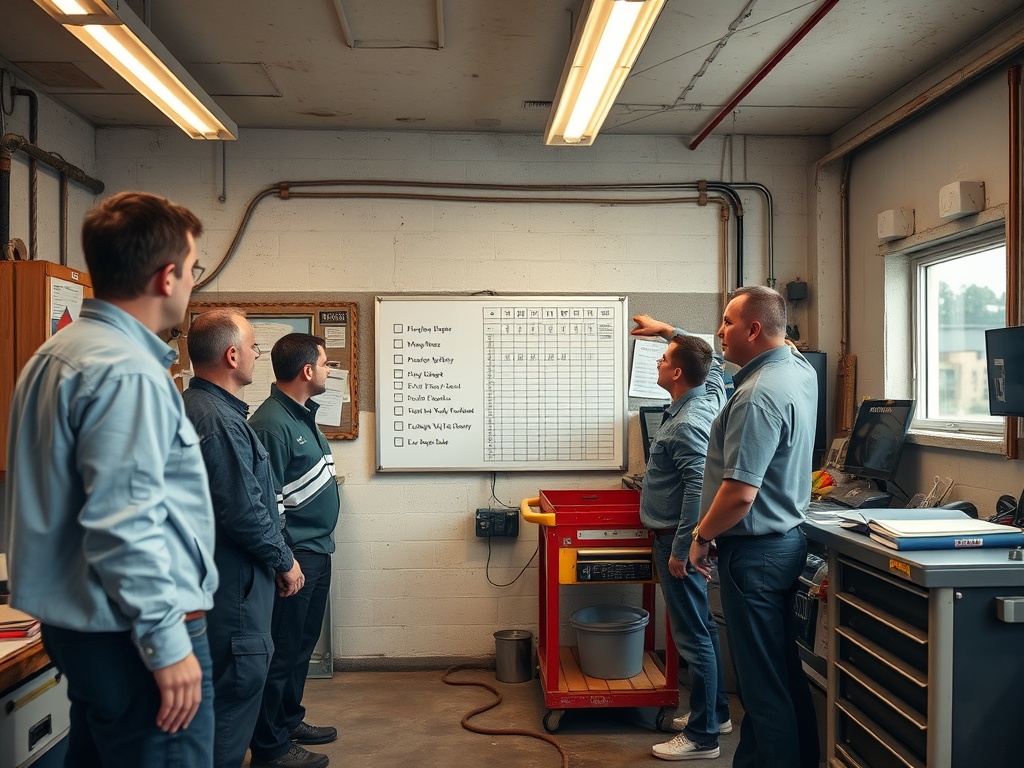
Field input is essential, but it should not become a vote on whether to follow core requirements. A strong system gives crews a path to flag steps that are unclear, unrealistic, duplicative, or unsafe. Supervisors can then adjust the procedure while protecting the intent. OSHA construction standards define many safety obligations at a regulatory level, so an SOP can organize work but cannot dilute applicable legal requirements.
Measure adoption with evidence
Do not judge SOP adoption only by whether a form was submitted. Look at rework logs, punch list patterns, safety observations, change orders, inspection failures, closeout delays, and client questions after handover. The growing interest in why clients are demanding more building performance data after handover also pushes contractors to produce cleaner turnover records. SOPs are where that discipline starts.
A scaling rule that works
Write every SOP so a competent new supervisor can use it without a private explanation from the person who created it. That forces clarity, cuts tribal knowledge, and makes growth less dependent on a few overloaded people.
How to pilot an SOP before rollout
A scalable SOP should be tested by the people who will use it. Give the draft to one experienced crew and one newer crew, then watch where they hesitate. If they ask the same questions, the SOP is unclear. If they skip the same step, the step may be poorly placed, unrealistic, or not understood. The pilot should produce edits to wording, sequence, photos, definitions, and sign-off requirements before the procedure becomes official.
Training and accountability without micromanagement
Accountability works best when expectations are concrete. Instead of saying crews must follow the SOP, define the records required, the acceptance criteria, and the escalation triggers. Supervisors can then audit work without hovering over every task. This keeps judgment in the field while giving management a consistent way to compare performance across locations, shifts, and project types.
Evidence to capture for construction SOP scaling
Useful evidence should be specific enough for someone outside the original conversation to understand the decision. Capture the condition observed, the location, the date, the responsible person, the related drawing or asset where relevant, and the action taken or deferred. Photos should show context before close-ups, and notes should separate facts from interpretations. This habit is especially valuable when a project has multiple shifts, outside contractors, tenant coordination, or owner representatives who join the process after early decisions have already been made.
The review record should also name unresolved assumptions. Examples include pending approvals, unclear access, unknown existing conditions, manufacturer lead times, owner selections, weather constraints, inspection availability, and maintenance resources after handover. Calling out uncertainty is not negative. It gives the team a chance to manage the issue with contingency, sequencing, professional review, or a documented owner decision before work or maintenance activity depends on a guess.
Operational control point
Pick one recurring task, rewrite the SOP around decision points and evidence, and test it with two different crews before scaling it company-wide.
General disclaimer: This construction and maintenance content is for informational and educational purposes only. It does not constitute engineering, legal, code-compliance, safety, procurement, or project-management advice. Requirements vary by jurisdiction, project type, contract, occupancy, and site conditions, so qualified professionals should review project-specific decisions.