
A comic shop pull list helps you reserve ongoing titles, but it only saves money when you set a budget, review orders monthly, and separate must-read series from curiosity picks. The best list reflects your actual reading pace.
TL;DR: Start with a monthly budget, choose a small core list, ask the shop about ordering deadlines, track what you read, and trim titles before the pile becomes expensive guilt.
Understand What a Pull List Is
A pull list is an arrangement with a comic shop to set aside specific titles or issues for you. It helps shops estimate demand and helps readers avoid missing issues. It is not a blank check. Once a shop orders based on your list, you should treat the commitment seriously.
Ask your local shop how its system works. Some stores use paper forms, some use email, some use apps, and some use services connected to distributor tools. Diamond Comic Distributors announced PREVIEWSworld PULLBOX as a way for customers to manage preorders with participating local shops, but availability and workflows vary. Your shop’s rules matter most.
Set a Budget Before Choosing Titles
Pick a monthly number you can afford without resentment. Then leave room for taxes, bags, boards, back issues, graphic novels, manga volumes, and surprise recommendations. If your budget is forty dollars, do not build a list that assumes every issue will be cheap or delayed. Prices vary, special issues cost more, and shipping schedules shift.
A useful starting formula is 70 percent core titles, 20 percent experiments, and 10 percent flexible shop browsing. The browsing category matters because part of the joy of a comic shop is discovery. If the pull list consumes the full budget, browsing becomes stressful.
Choose a Core List
| Category | How many to start | Good reason to include |
|---|---|---|
| Must-read ongoing series | 2 to 4 | You reliably read each issue soon after pickup |
| Creator-follow titles | 1 to 2 | You trust the writer, artist, or team |
| Limited series | 1 to 2 | Clear endpoint and manageable cost |
| Experiments | 1 to 3 | You are testing genre, publisher, or format |
Avoid adding every issue connected to a crossover unless you truly want the whole event. Tie-ins can multiply costs quickly. Ask the shop which issues are essential and which are optional. A good shop wants sustainable readers, not one burned-out month.
Read the Solicits With a Filter
Monthly solicitations can make everything sound urgent. Look past hype language and ask practical questions. Is this a new story arc or the middle of one? Is it a limited series with a fixed number of issues? Is the creative team the reason you care? Is the issue returnable or heavily allocated? Will you want the single issues, or would a collected edition suit you better?
If your group discusses comics like a book club, connect your list to preparing great discussion questions for a book club meeting. A title that creates strong conversation may be worth keeping even if it is not your usual genre.
Review the List Every Month
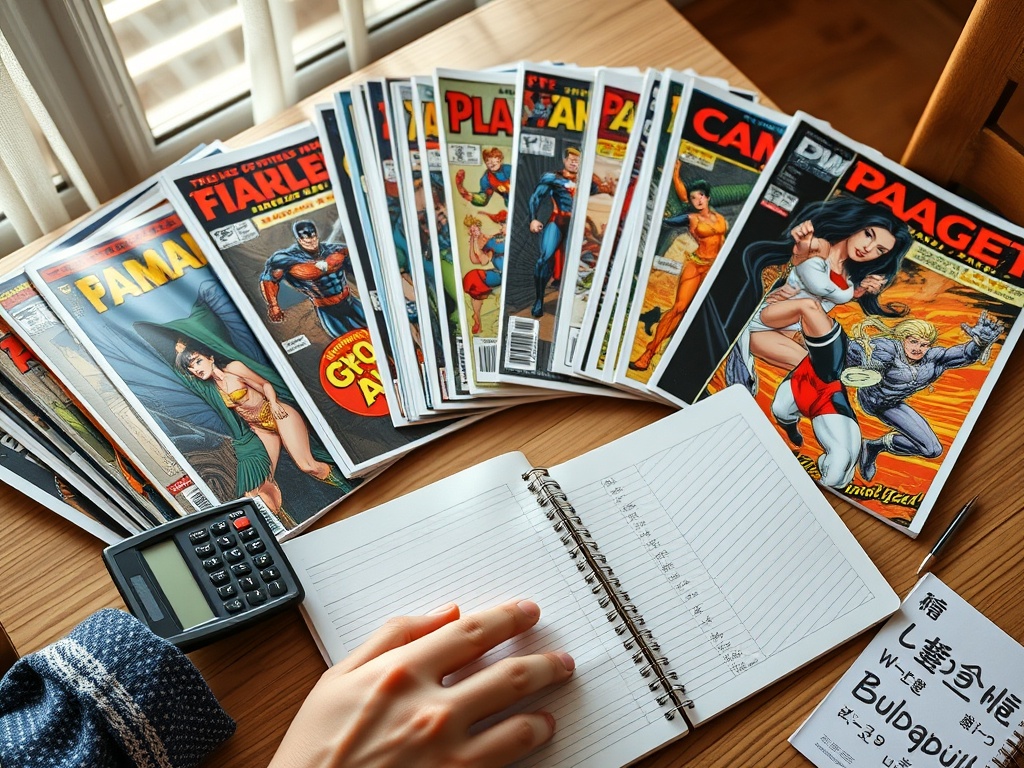
Set a monthly pull-list review before final order deadlines. Mark each title as keep, pause, trade-wait, or drop. “Trade-wait” means you prefer to read the collected edition later. “Pause” means you need a break but may return for a new arc. Dropping a title is not betrayal. It is how you keep the list healthy.
Track unread issues at home. If a series piles up for three months, ask why. You may still like the idea of it more than the reading experience. That is common. Let the evidence guide you.
Be a Good Customer to the Shop
Pick up regularly. Communicate changes early. Do not ask the shop to reserve many items and then disappear. If money is tight, tell them you need to reduce your list before the next order cycle. Shops can often help you prioritize.
Ask for recommendations with constraints. Instead of “What is good?” say, “I have room for one horror limited series under six issues” or “I like character-led sci-fi but not huge crossovers.” Specific questions lead to better suggestions.
Common Overspending Traps
Variant covers are the obvious trap. They can be fun, but decide whether you collect them intentionally or buy them on impulse. Another trap is completion pressure. Owning every issue of a run is satisfying only if the run still matters to you. A third trap is confusing scarcity with desire. Just because something might sell out does not mean you need it.
Also watch for format duplication. If you buy single issues, the trade paperback, the hardcover, and the digital edition, make sure there is a reason. Most readers do not need every format.
If you are building broader media habits, the budget discipline here pairs well with a weekly music discovery routine: limit the intake, then go deeper with what survives.
A Pull List That Stays Fun
A good pull list should make pickup day exciting, not embarrassing. You should know roughly what you owe, why each title is there, and when you last reviewed it. Keep a small wishlist for future collected editions so dropping a monthly title does not feel final.
The healthiest list respects three things: your budget, your shop’s ordering process, and your actual reading life. When all three line up, the pull list becomes a useful relationship with a local store rather than a stack of obligations.
Decide When Singles Beat Collected Editions
Single issues are best when you enjoy monthly pacing, letters pages, cover art, shop conversation, or supporting a series as it releases. Collected editions are better when you prefer complete arcs, shelf organization, or lower decision fatigue. Neither format is morally better. The budget question is which one matches your behavior. If you always wait until three issues pile up, a trade paperback may serve you better. If you love pickup day, singles may be worth the structure.
Use a simple ceiling for experiments. For example, keep no more than three trial titles at once, and drop one before adding another. This turns curiosity into a rotating shelf rather than a permanent expense. It also makes recommendations from shop staff easier because they know you have limited open slots.